
In chocolate production, the depositing stage is key to maintaining product quality. Once chocolate is properly tempered, how it is handled and deposited into molds directly affects consistency, appearance, and performance on the production line.
Even small variations in portioning, flow, or temperature can cause uneven weights, surface imperfections, and structural issues. These problems can compromise the quality achieved during tempering and affect the final product’s look and texture.
By understanding and controlling the depositing process, manufacturers can ensure chocolates are consistent in weight, texture, and finish across every batch protecting both quality and efficiency in production.
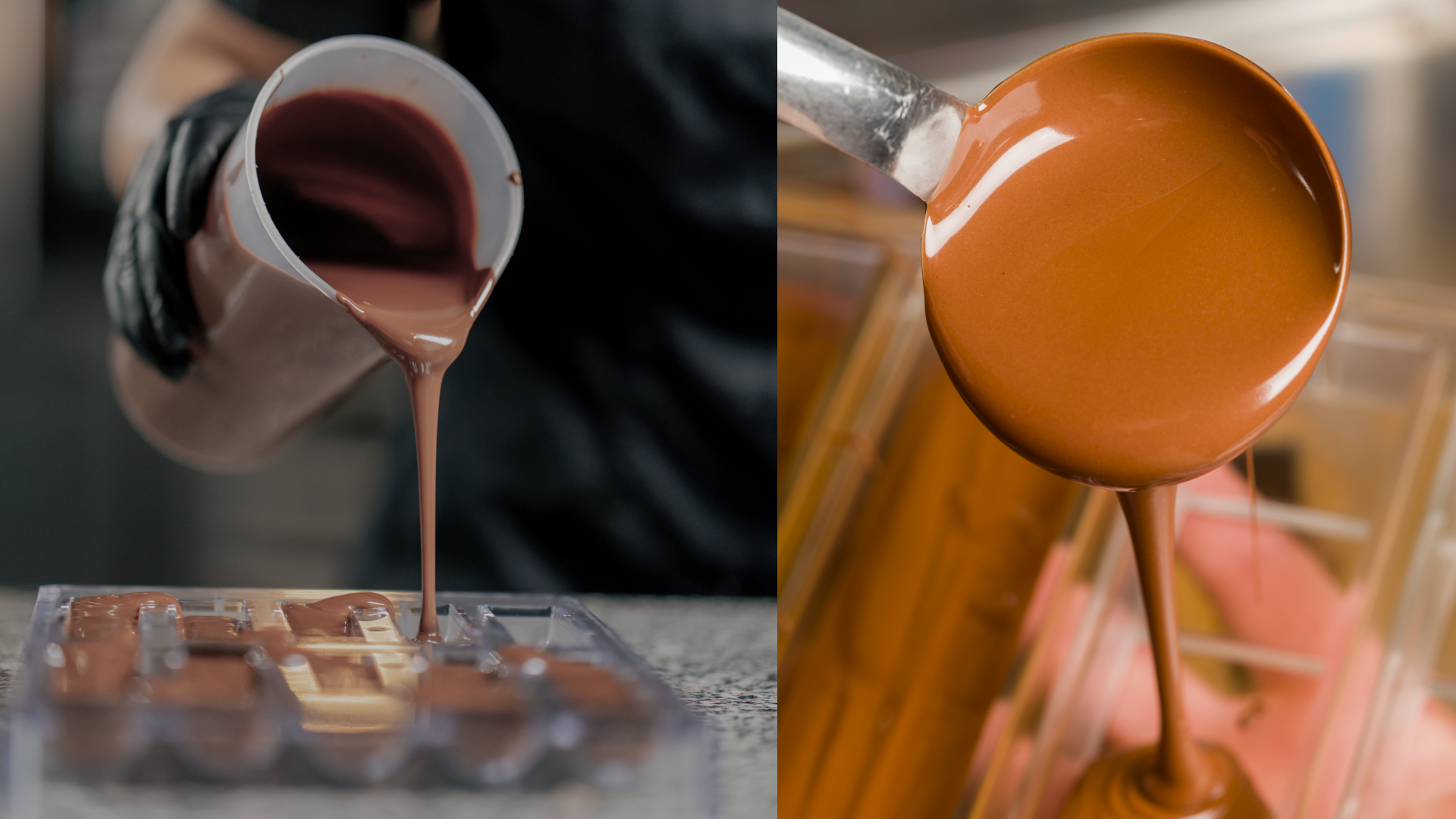
Hand depositing is common in small batch environments, but it introduces variability that can affect the final product. Inconsistent portioning often leads to uneven weights and visual differences across molds. Extended exposure to ambient conditions can also cause temperature and viscosity fluctuations, increasing the risk of losing temper before cooling.
Air incorporation is another challenge. Manual depositing makes it easier for air bubbles to form, especially when filling detailed molds, which can affect structure and appearance. Over time, operator fatigue and technique differences further increase inconsistency between batches.
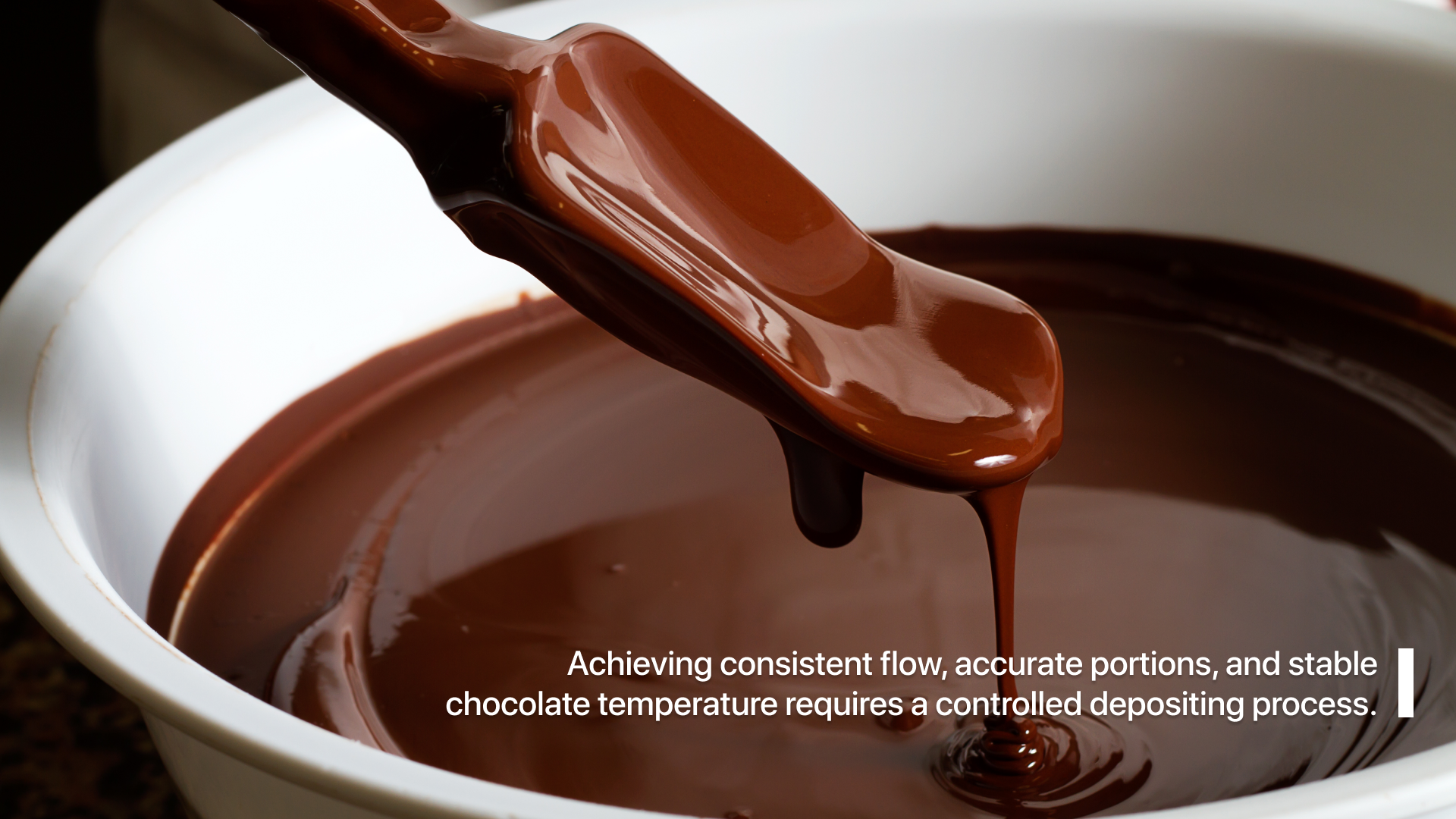
A controlled depositing process ensures consistent flow, precise portioning, and stable chocolate temperature throughout production key factors in protecting product quality. By maintaining these conditions, manufacturers can achieve:
Reducing manual handling also minimizes variability caused by operator technique or fatigue, helping teams achieve repeatable, reliable results during cooling and setting.
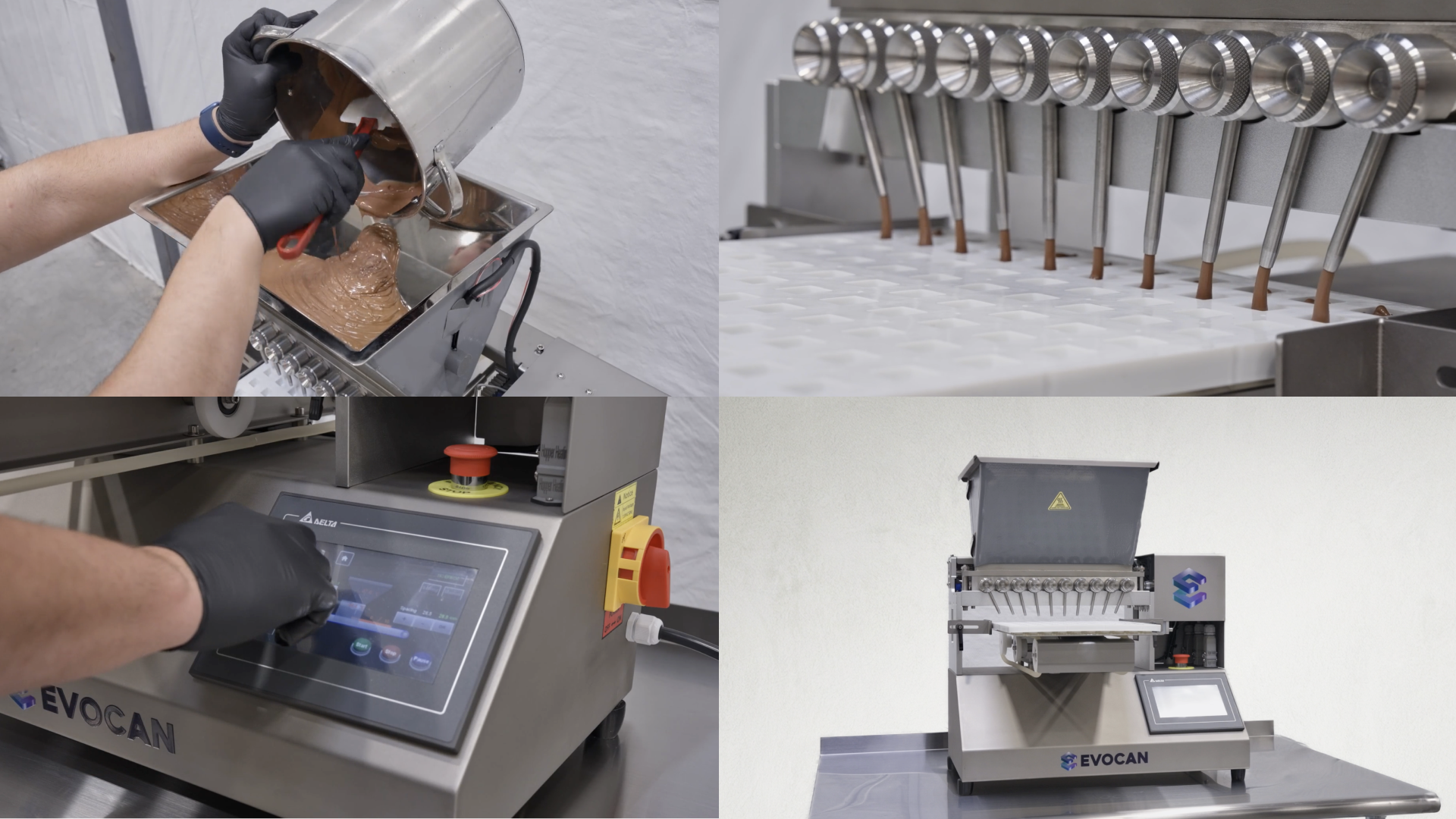
A tabletop depositor provides precision and repeatability in environments where flexibility is still required. It allows producers to deposit consistent volumes of chocolate while minimizing exposure to ambient conditions. This results in better weight control, improved visual consistency, and reduced waste.
Tabletop depositing is particularly well suited for product development, small batch production, and growing operations looking to move beyond hand depositing without committing to a full scale production line.
Depositing is one of the final opportunities to protect chocolate quality before cooling and setting. Improving control at this stage helps reduce variability, maintain consistency, and support efficient production.
.png)
If you are exploring ways to improve your chocolate depositing process or want to learn how a Tabletop Depositor could fit into your workflow, contact our team to discuss your application and production needs.
Discover how much time, labor, and money you could save with EVOCAN’s Tabletop Depositor Calculator.
It’s the simplest way to see the real ROI of automation for your candy production.
.png)
.png)
.png)
Want a Site like Mine? | Reach Out to Reach Ecomm Inc.
Copyright © 2025. Evocan